
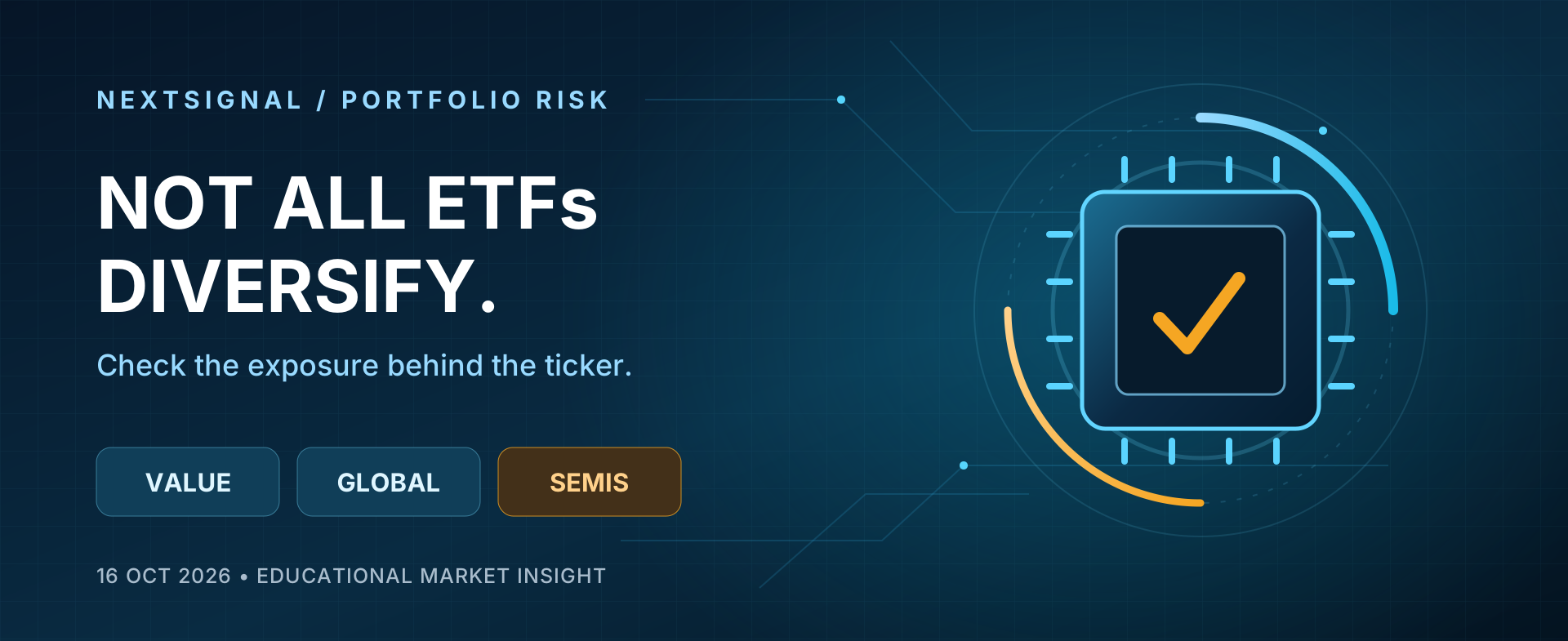
Why value, international and semiconductor ETFs affect concentration risk differently, using October 15, 2026 market moves as an example.
An ETF is not automatically a seatbelt
On Thursday, October 15, 2026, markets showed why owning several tickers is not the same as diversifying risk. Reuters reported the Philadelphia Semiconductor Index fell about 1.7%, even as the S&P 500 rose 0.27% and the Dow gained 1.08%. The broader market and the AI/semiconductor complex did not move in lockstep.
These are completed October 15 US-session figures, not a forecast for Friday.
Three ETFs, three different jobs
VTV – US value: The Vanguard Value ETF holds large US companies with value characteristics. Its sector mix differs substantially from a pure semiconductor portfolio. Value stocks can still fall, and some technology names may be included.
VXUS – international equities: The Vanguard Total International Stock ETF tracks the FTSE Global All Cap ex US Index, covering developed and emerging equity markets outside the US. It does not protect against a global equity decline; it can also hold major semiconductor companies in Asia and Europe.
SOXX – semiconductors: The iShares Semiconductor ETF tracks a US semiconductor-sector index. It spreads single-company risk, but not sector risk. iShares listed around 30 holdings as of September 24, 2026. If you already own many chip stocks, adding SOXX may amplify the same exposure rather than offset it.
The overlap matters
Before adding an ETF to a concentrated portfolio, ask four questions:
- Sector: Does the new position respond to the same drivers as existing holdings?
- Geography and currency: Am I adding genuinely different risk factors or merely new listings?
- Top holdings: Do I already own the same companies directly and through funds?
- Stress correlation: What happens when interest rates rise or AI spending expectations reset?
A blend of US value and international equities may reduce concentration in a technology-heavy portfolio. A semiconductor ETF can also be appropriate when sector exposure is intentional. But it should be counted as a sector bet, not a defensive cushion.
The NextSignal takeaway
Diversification is not the number of ETF symbols in your account. It is how differently the underlying risks behave. Instead of asking “How many ETFs do I own?”, ask “Which risks did I actually change?”
As of October 16, 2026, 07:00 CEST. Not financial advice. Investing involves risk.
Sources
- Reuters, October 15, 2026 market wrap
- Vanguard VTV fact sheet (March 31, 2026)
- Vanguard VXUS fact sheet (March 31, 2026)
- iShares SOXX fund profile and holdings
SOX on Oct 15, 2026 (Reuters)
As of Sep 24, 2026 (iShares)
Developed and emerging markets outside the US
A sector ETF diversifies individual names, but may increase your existing sector exposure.
An ETF label alone is not diversification. What matters is its holdings, sector exposures and how they behave together under stress.
Related articles
 Stocks
TSMC Q3: Rekordumsatz und starker Q4-Ausblick
TSMC übertrifft die Umsatzprognose für Q3 2026. Die tatsächlichen Margen und die neue Q4-Guidance im Überblick.
Read article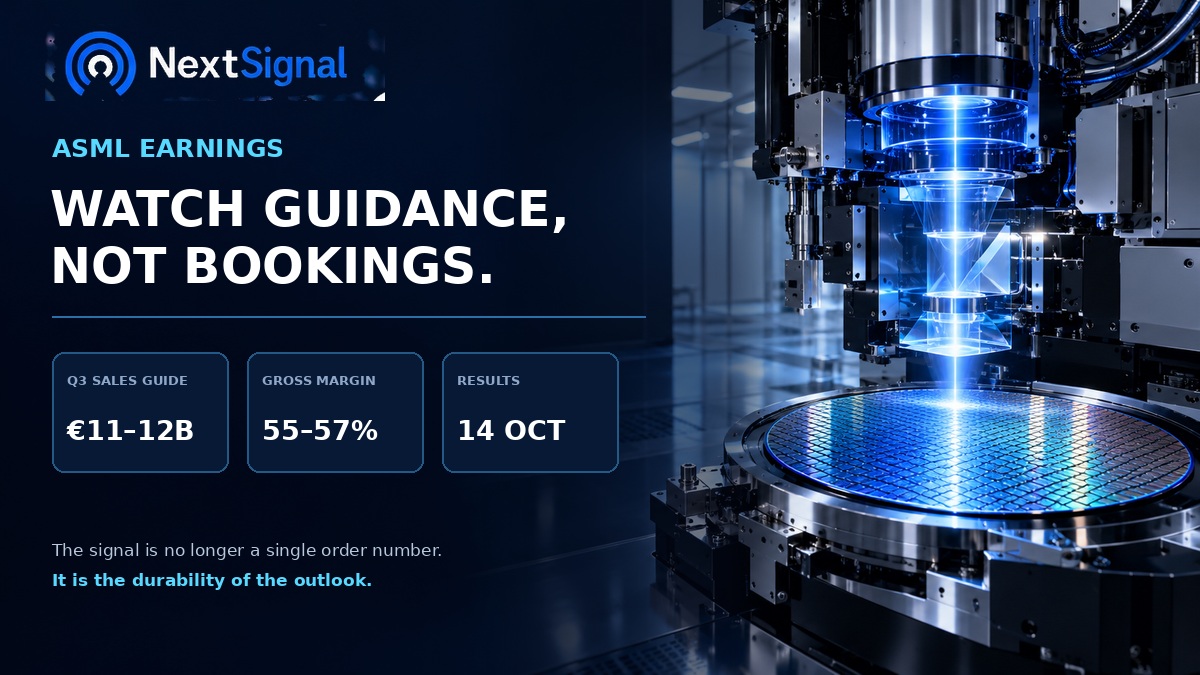 Stocks
ASML vor den Q3-Zahlen: Warum der Ausblick wichtiger ist als Bookings
ASML veröffentlicht keine quartalsweisen Bookings mehr. Vor den Q3-Zahlen zählen deshalb die offiziellen Ziele für Umsatz und Bruttomarge – und vor allem die Beständigkeit des Ausblicks.
Read article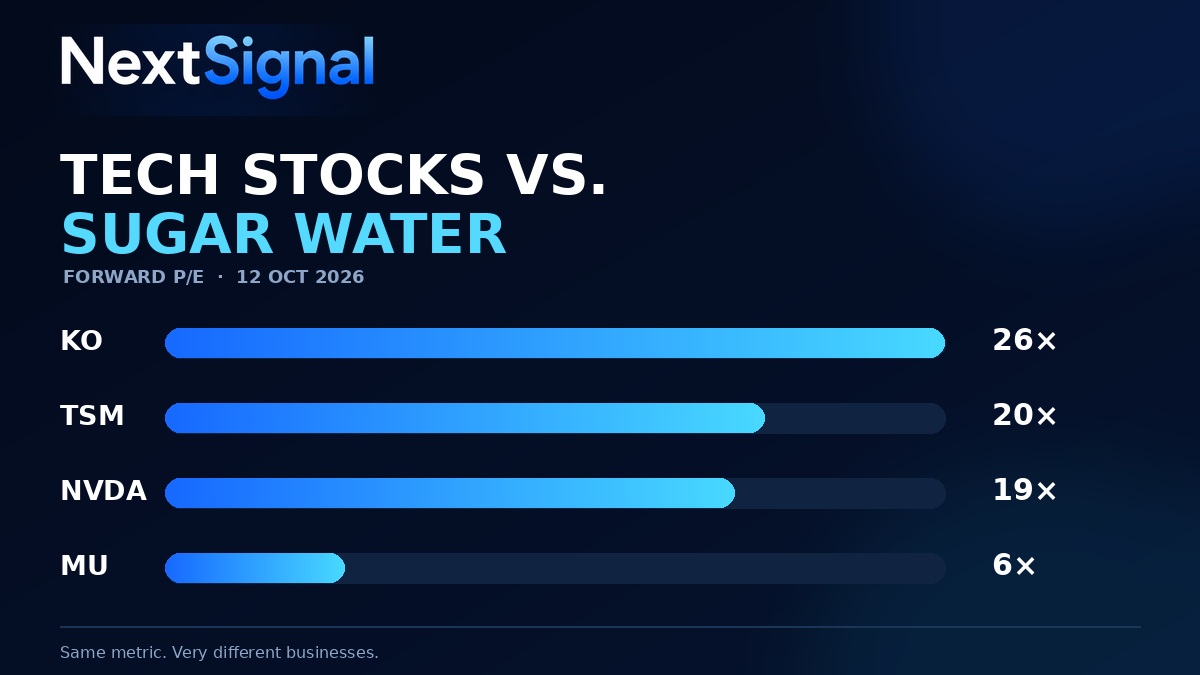 Market Analysis
Tech-Aktien vs. Zuckerwasser: Was das KGV wirklich sagt
Coca-Cola mit 26×, TSMC mit 20×, Nvidia mit 19× und Micron mit 6× Forward-Gewinn: Warum das KGV ohne Wachstum und Risiko nur die halbe Geschichte erzählt.
Read article