
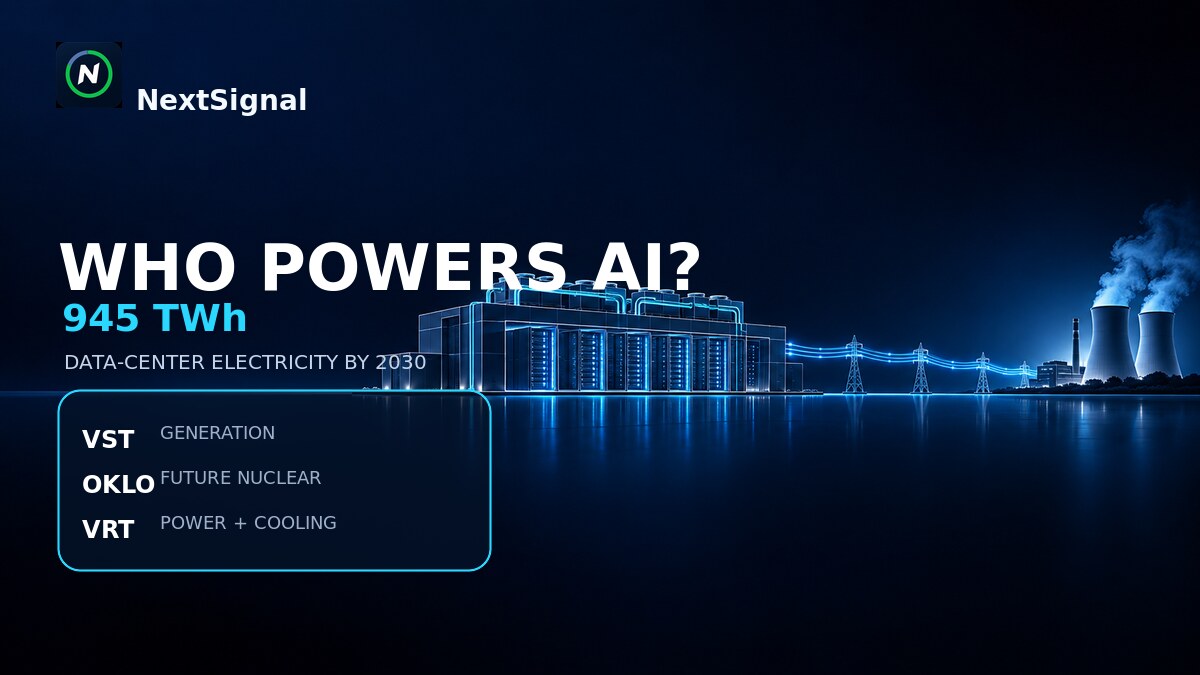
Data centers could consume around 945 TWh of electricity by 2030. Vistra, Oklo and Vertiv represent three distinct layers of the AI energy stack.
AI needs more than chips
The AI boom is usually discussed through GPUs, memory and data centers. But every additional unit of compute needs reliable electricity, while denser systems require increasingly sophisticated power distribution and cooling.
The scale is substantial. According to the International Energy Agency, global data-center electricity consumption is expected to more than double to around 945 TWh by 2030. In the United States, data centers could account for almost half of the additional electricity demand through the end of the decade.
Three companies, three distinct roles
Vistra ($VST) – power generation
Vistra owns and operates a broad power-generation fleet. In August 2026, the company also described itself as the preferred power provider for Helix Digital Infrastructure, the platform formed with NVIDIA, KKR and KIA. Vistra therefore represents the most direct layer of the chain: available electricity.
Oklo ($OKLO) – potential future nuclear capacity
Oklo is developing advanced small nuclear powerhouses. In January 2026, Oklo and Meta announced support for a project of up to 1.2 GW in Ohio, with the first phase targeted no earlier than 2030. The potential is significant, but so are execution, regulatory and timing risks. Oklo is not established power generation today; it is a long-duration development bet.
Vertiv ($VRT) – making power usable and removing heat
Vertiv does not generate electricity. It provides power distribution, backup systems and cooling inside the data center. Its collaboration with Oklo aims to connect future nuclear generation with purpose-built power and thermal infrastructure.
The market thought
AI infrastructure does not end at the chip. The complete chain is generation, grid connection, power management and cooling. Separating these layers makes it easier to understand which companies genuinely benefit from electricity demand – and which are only loosely associated with the narrative.
The next bottleneck may therefore be less about the fastest GPU and more about who can reliably deliver enough electrons to the rack around the clock.
Projected global data-center electricity consumption
Planned Ohio capacity by 2034
Generation, future nuclear, power and cooling
The AI power trade is not one stock but a chain spanning generation, grid access, power management and cooling.
Vistra, Oklo and Vertiv are not interchangeable AI power stocks: they occupy different layers and carry very different risks.
These companies could also benefit from this theme.
VST fully analyzed
AI score, trend, RSI and valuation at a glance.
Simulate investment
Calculate how an investment would have performed historically.
Discover NextSignal
All stocks with score, trend and AI assessment at a glance.
Related articles
Behind the Trader: Was würde mich umstimmen?
19 Positionen und eine entscheidende Frage: Welche Fakten würden eine AI-Investmentthese widerlegen?
Read article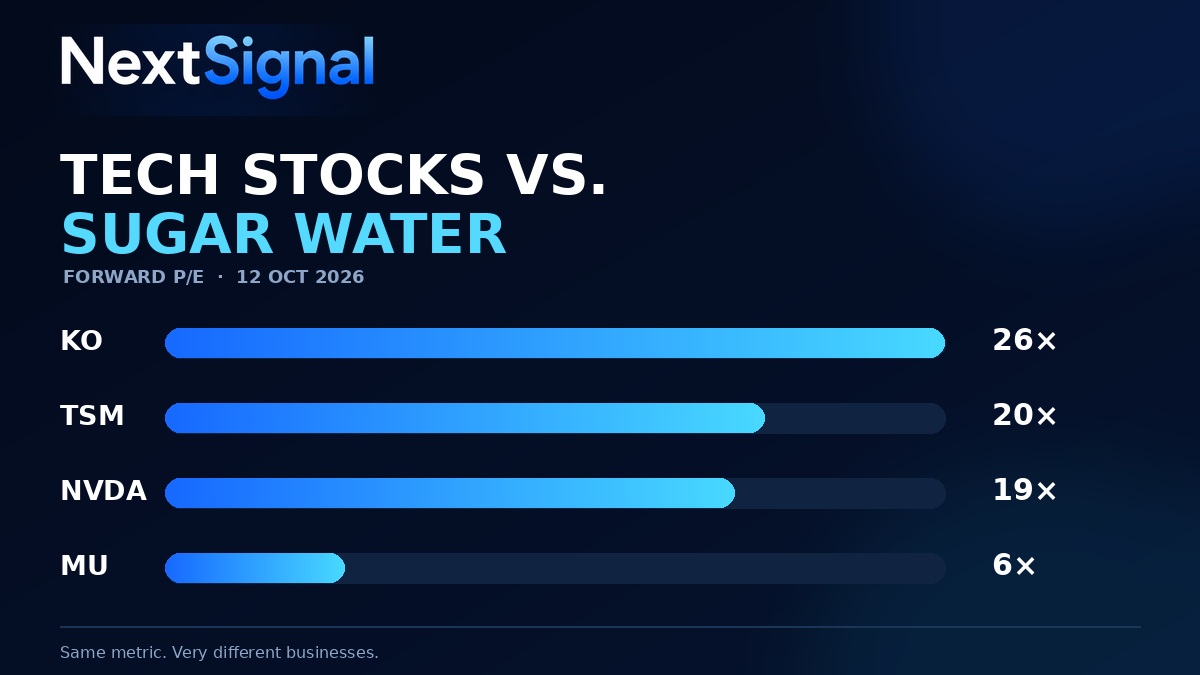 Market Analysis
Tech-Aktien vs. Zuckerwasser: Was das KGV wirklich sagt
Coca-Cola mit 26×, TSMC mit 20×, Nvidia mit 19× und Micron mit 6× Forward-Gewinn: Warum das KGV ohne Wachstum und Risiko nur die halbe Geschichte erzählt.
Read article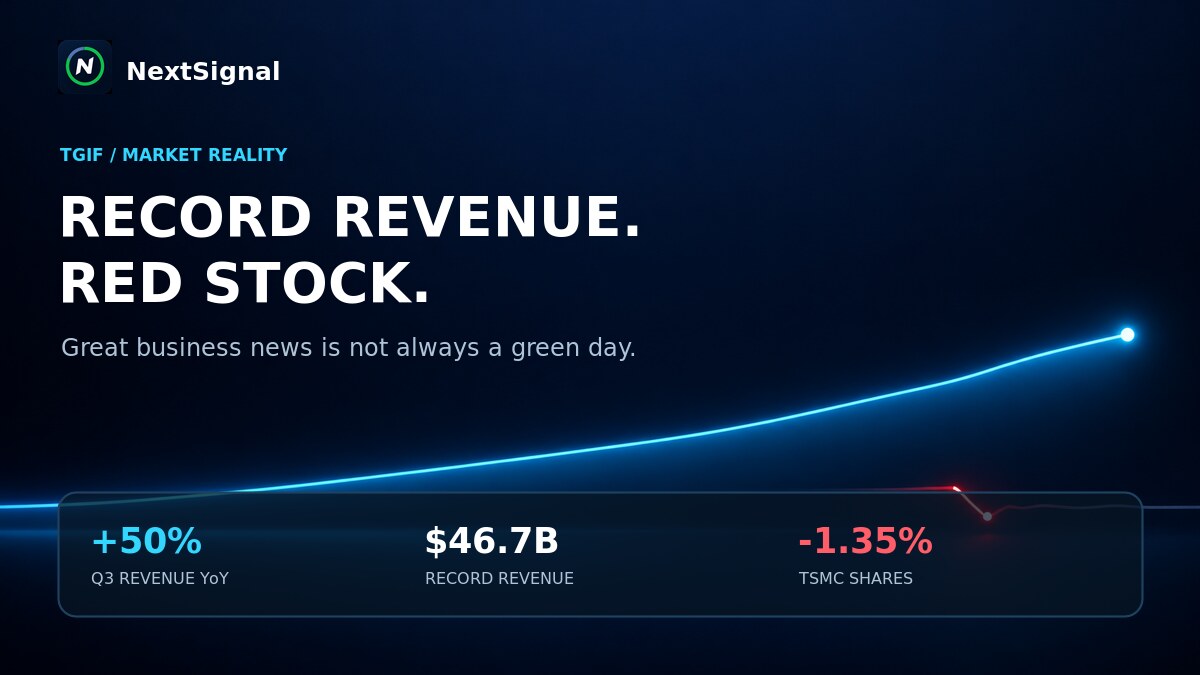 Stocks
Rekordumsatz, rote Aktie: Was TSMC über Erwartungen lehrt
TSMC steigert den Quartalsumsatz um 50 % auf einen Rekordwert. Warum die Aktie trotzdem rot blieb und was Anleger daraus über Erwartungen lernen können.
Read article