

Robot vacuums are mainstream while humanoid systems are only beginning. How physical AI could transform robotics — and which business models may emerge.
“There is no reason for any individual to have a computer in their home.”
The statement is commonly attributed to DEC founder Ken Olsen in 1977. The exact wording is disputed, and Olsen later said his meaning had been taken out of context. Still, it is a useful reminder of how difficult it is to anticipate the everyday impact of a new technology. Background on the attribution
Today, almost every household owns several computers. We simply call them smartphones, laptops, televisions, routers and smartwatches.
Could robotics be approaching a similar point?
The first household robot is already here
According to the International Federation of Robotics, about 20.1 million consumer service robots were sold in 2024. 97% were designed for domestic tasks such as floor cleaning and lawn care. IFR World Robotics 2025
The first robot has therefore already entered the home. It simply does not look human.
Humanoid robotics is at a completely different stage. Only around 7,000 humanoid robots were sold worldwide in 2025, many for research, AI development and industrial pilots. Reuters, 21 September 2026
What was missing was the “brain”
Robots have been able to drive, grasp, weld and move objects for years. The challenge begins when their surroundings are not perfectly predictable.
A household robot would need to handle pets, objects left on the floor, differently arranged rooms and countless exceptions. This is where physical AI comes in: systems combine language, images, video and sensor data to perceive their environment, understand it and turn that understanding into action. NVIDIA: What is Physical AI?
That creates a progression from:
- chatbot to agent,
- agent to autonomous system,
- autonomous system to robotics.
AI then moves beyond processing information and begins performing work in the physical world.
But can robotics become a profitable business?
Technical fascination alone does not create a viable business model. The key question is whether a robot can perform a useful task reliably and at a lower cost than the alternative.
That is why Robot-as-a-Service is gaining importance alongside traditional hardware sales. The global fleet of professional RaaS systems grew 31% in 2024 to more than 24,500 units. In transportation and logistics, the rental and subscription model expanded by 42%. IFR Service Robots Report
This lowers upfront costs for customers while creating recurring revenue for suppliers. Economically, robotics may therefore begin to resemble software more than traditional machinery.
Will every household own a robot?
There is no serious answer yet. General-purpose household robots remain expensive, safety-critical and extremely difficult to operate reliably in chaotic environments.
But mass adoption does not need to begin with a humanoid butler that can do everything. Robot vacuums point to the more likely path: people do not buy a technology because it is called “robotics.” They buy a device that removes an annoying task.
Future households may therefore stop asking whether they need a robot. The question may simply become: Which tasks should it handle?
Data as of 25 September 2026.
Consumer service robots sold in 2024.
Share of consumer robot sales designed for domestic tasks.
Worldwide sales in 2025.
Robotics becomes a mass market when it stops feeling futuristic and starts saving time reliably.
The commercial breakthrough may not come from the most spectacular robot, but from systems that perform one clearly defined task reliably and at lower cost.
These companies could also benefit from this theme.
NVDA fully analyzed
AI score, trend, RSI and valuation at a glance.
Simulate investment
Calculate how an investment would have performed historically.
Discover NextSignal
All stocks with score, trend and AI assessment at a glance.
Related articles
 AI & Technology
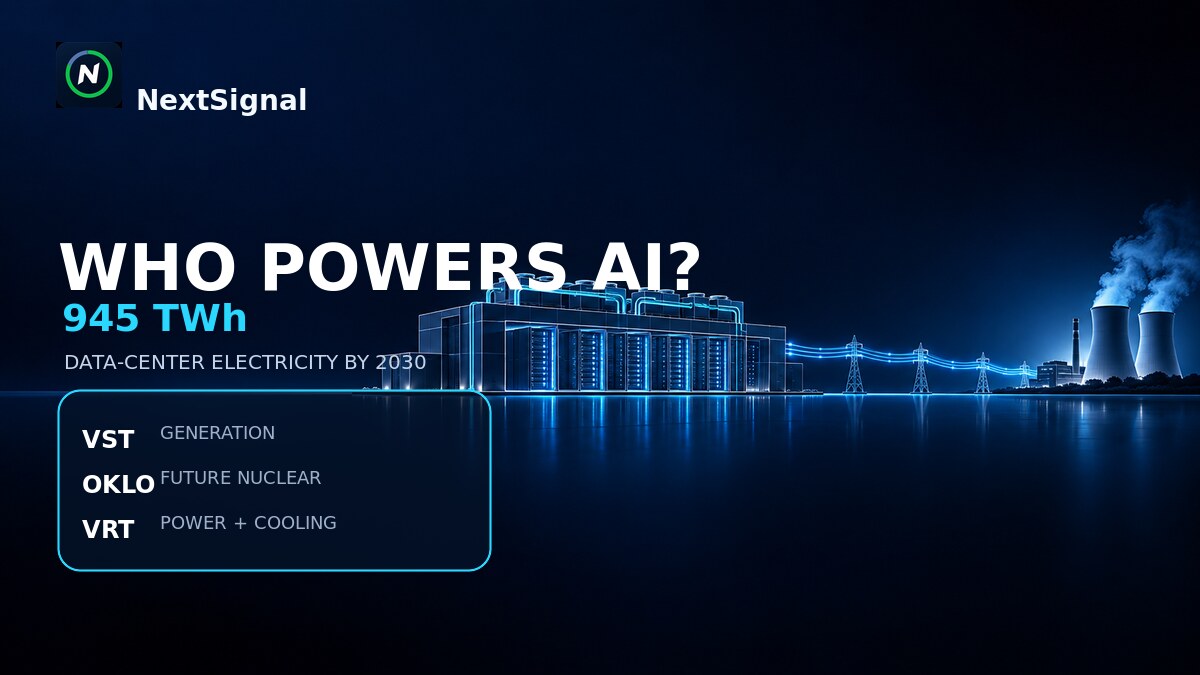
AI braucht nicht nur Chips: Wer liefert den Strom für den AI-Boom?
Rechenzentren könnten bis 2030 rund 945 TWh Strom verbrauchen. Vistra, Oklo und Vertiv stehen dabei für drei unterschiedliche Ebenen der AI-Energie-Infrastruktur.
Read article AI & Technology
AI liefert ROI – doch der Sprung vom Pilotprojekt in den Betrieb stockt
Fast drei Viertel der befragten Unternehmen melden positive finanzielle Resultate mit AI – doch weniger als ein Drittel kommt über Pilotprojekte hinaus. Warum Umsetzung jetzt zum entscheidenden Engpass wird.
Read article AI & Technology
AI braucht Leitplanken: Nvidia will auch die Kontrollschicht besetzen
Nvidia erweitert sein Angebot über Rechenleistung hinaus: OpenShell setzt Grenzen für AI-Agents, Sentry überwacht sie auf Hardware-Ebene. Strategisch relevant – aber noch kein Umsatzbeweis.
Read article