

Nvidia is moving beyond compute: OpenShell sets boundaries for AI agents while Sentry monitors them at the hardware level. Strategically relevant, but not yet proof of material revenue.
AI agents are designed to do more than answer questions. They can research independently, operate software and execute tasks. That is their advantage—and also a new security problem: the more autonomy a system receives, the more important it becomes to define which actions it is allowed to take.
Nvidia adds control to compute
On September 28, 2026, Nvidia introduced its Open Agent Safety Platform. It has two layers:
- OpenShell creates an open software environment that restricts an AI agent's access and actions.
- Sentry adds hardware-level monitoring and can stop suspicious agents that move beyond their intended boundaries.
OpenShell is designed to work not only with Nvidia systems but also with processors from Arm and Intel. Sentry, meanwhile, runs on Nvidia's BlueField technology. Nvidia is launching the platform with dozens of partners, including Anthropic. Source: Reuters, September 28, 2026
The strategically interesting part
Nvidia no longer sells only GPUs. It is building a platform spanning chips, networking, CPUs and software. OpenShell and Sentry add another layer: control over how autonomous AI systems access and act within infrastructure.
That could matter to enterprises. An AI agent that reads email, executes code or accesses internal systems needs different safeguards from a conventional chatbot. As more agents enter production, demand for verifiable boundaries and independent monitoring is likely to grow.
Not a new billion-dollar business yet
The announcement does not prove that Nvidia can turn this into a material new revenue stream. OpenShell is open source, the market is still early and security standards will probably be shaped by several providers.
The relevant point is therefore not near-term revenue. It is Nvidia's attempt to occupy both the compute layer and the security and control layer of the agent era.
For investors, that creates a new question: Will Nvidia merely supply the machines that run AI—or also the guardrails within which those systems operate?
Restricts the access and actions available to AI agents.
Independently monitors agents using BlueField technology.
Strategically interesting, but not yet proof of material revenue.
Nvidia is trying to own not only AI compute, but also the security and control layer for autonomous agents.
These companies could also benefit from this theme.
NVDA fully analyzed
AI score, trend, RSI and valuation at a glance.
Simulate investment
Calculate how an investment would have performed historically.
Discover NextSignal
All stocks with score, trend and AI assessment at a glance.
Related articles
 Market Analysis
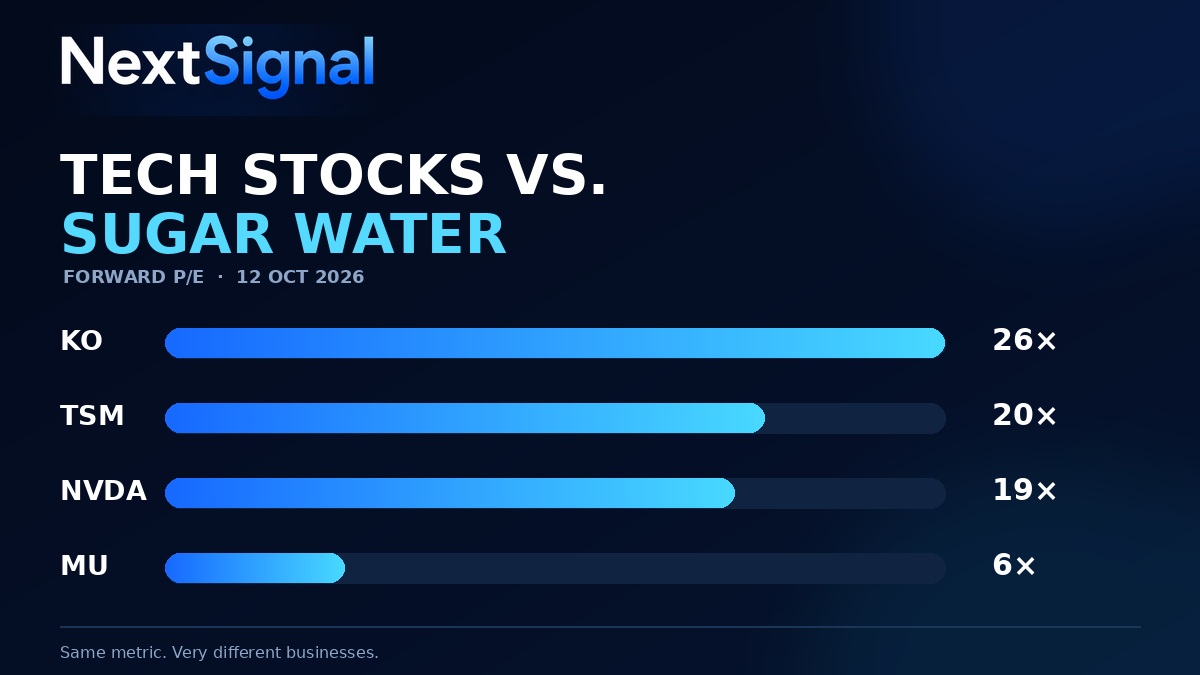
Tech-Aktien vs. Zuckerwasser: Was das KGV wirklich sagt
Coca-Cola mit 26×, TSMC mit 20×, Nvidia mit 19× und Micron mit 6× Forward-Gewinn: Warum das KGV ohne Wachstum und Risiko nur die halbe Geschichte erzählt.
Read article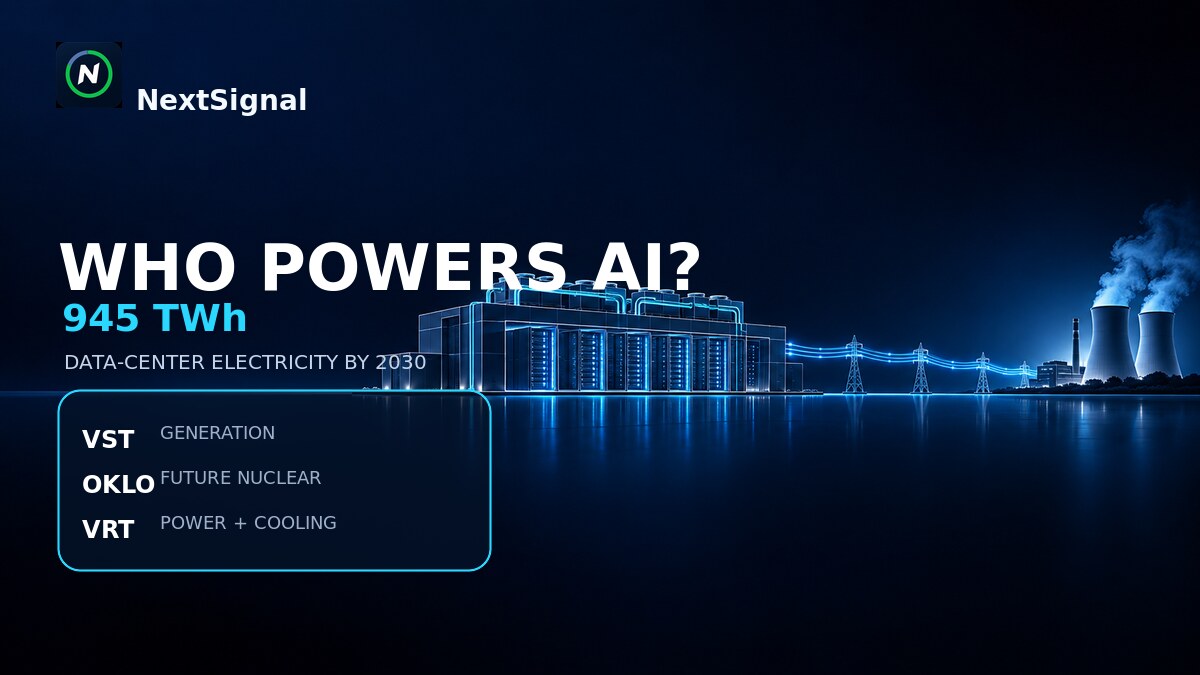 AI & Technology
AI braucht nicht nur Chips: Wer liefert den Strom für den AI-Boom?
Rechenzentren könnten bis 2030 rund 945 TWh Strom verbrauchen. Vistra, Oklo und Vertiv stehen dabei für drei unterschiedliche Ebenen der AI-Energie-Infrastruktur.
Read article AI & Technology
AI liefert ROI – doch der Sprung vom Pilotprojekt in den Betrieb stockt
Fast drei Viertel der befragten Unternehmen melden positive finanzielle Resultate mit AI – doch weniger als ein Drittel kommt über Pilotprojekte hinaus. Warum Umsetzung jetzt zum entscheidenden Engpass wird.
Read article